J7 · Journal Article
Published
Impact Factor 5.4Q1
Analyzing the Suitability of IEEE 802.11ah for Next Generation Internet of Things: A Comparative Study
Ad Hoc Networks, vol. 156, art. no. 103437, 2024
Abstract
The abstract for this paper is available on the publisher's page. Read it on the publisher's site (opens in a new tab).
Research Highlights
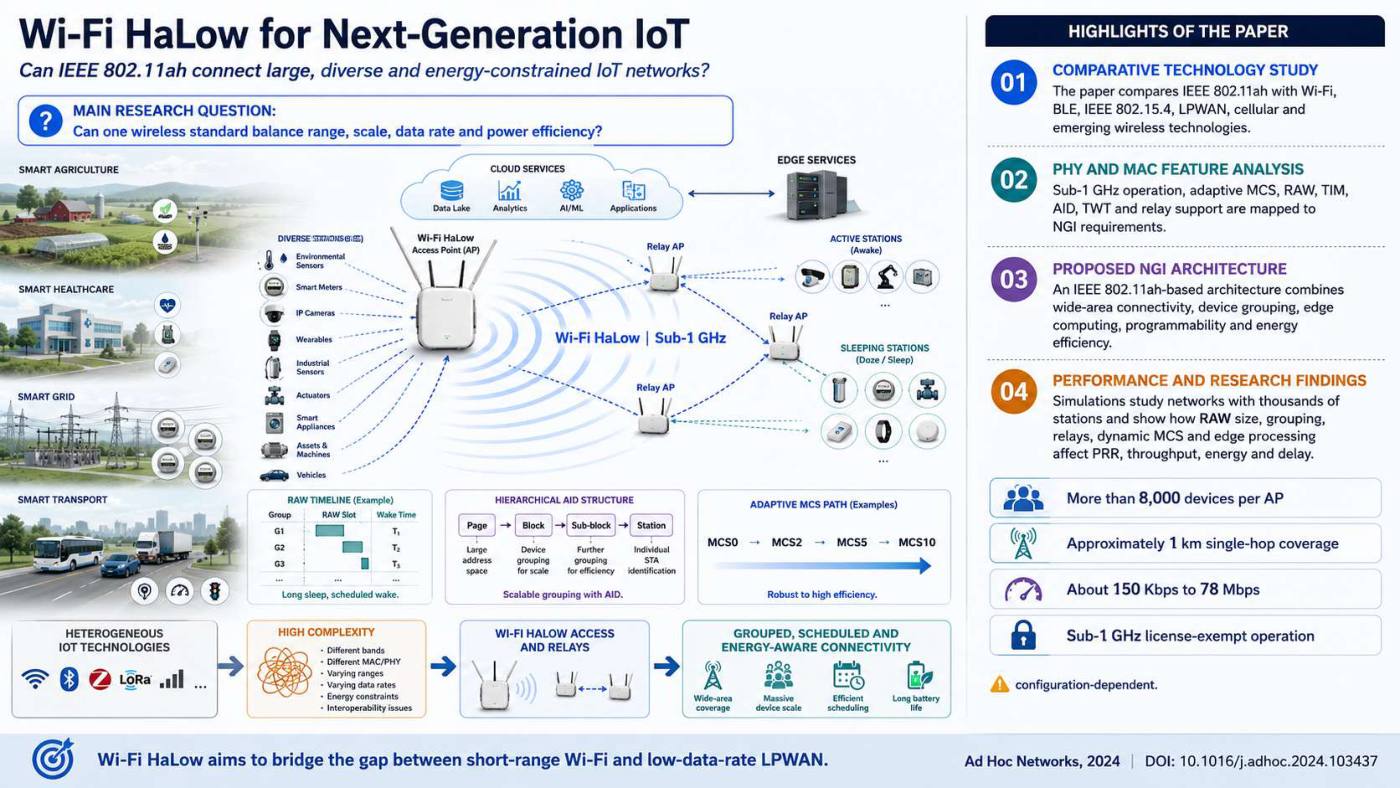
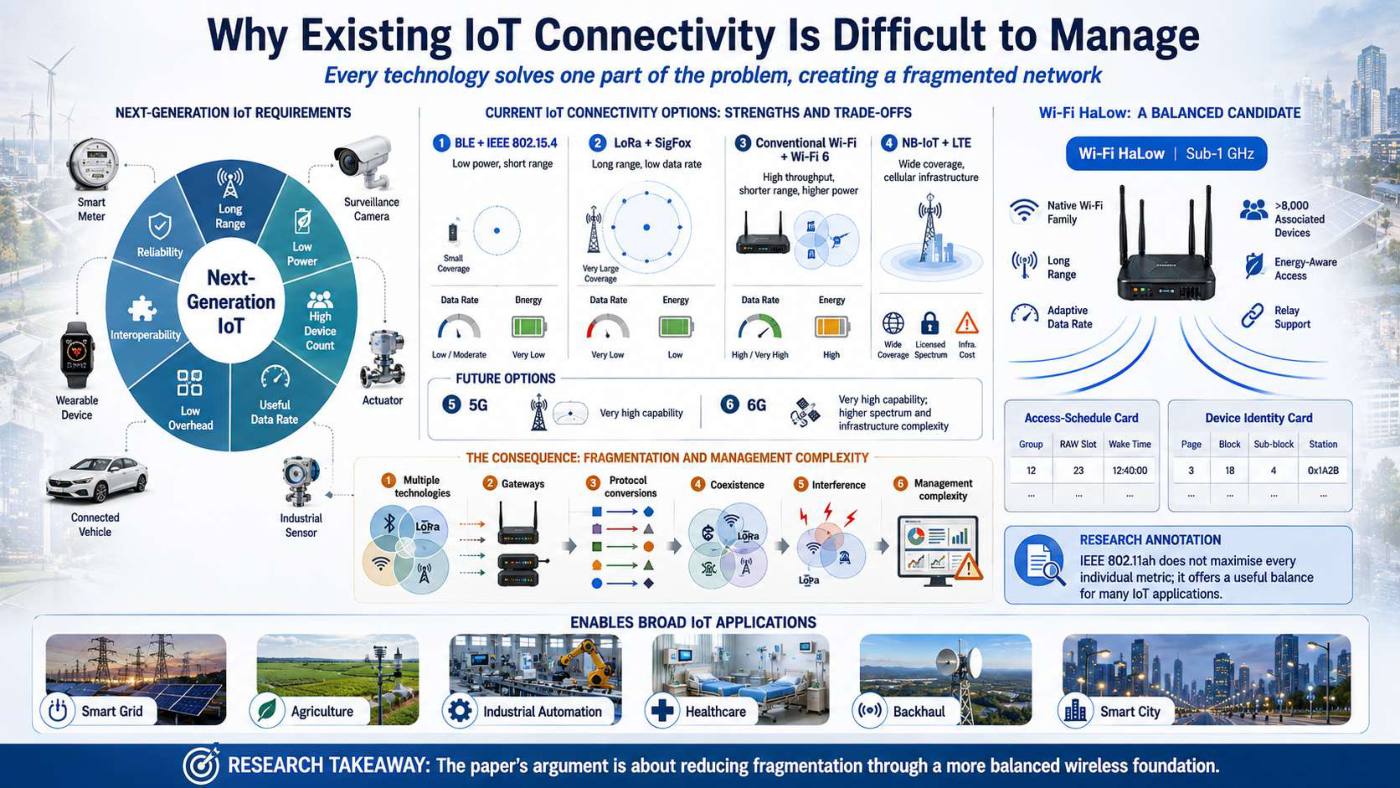
- Discussed the characteristics of communication technologies, different supported standards, and the essential requisite of an NGI architecture.
- We compare the existing state-of-the-art communication standards.
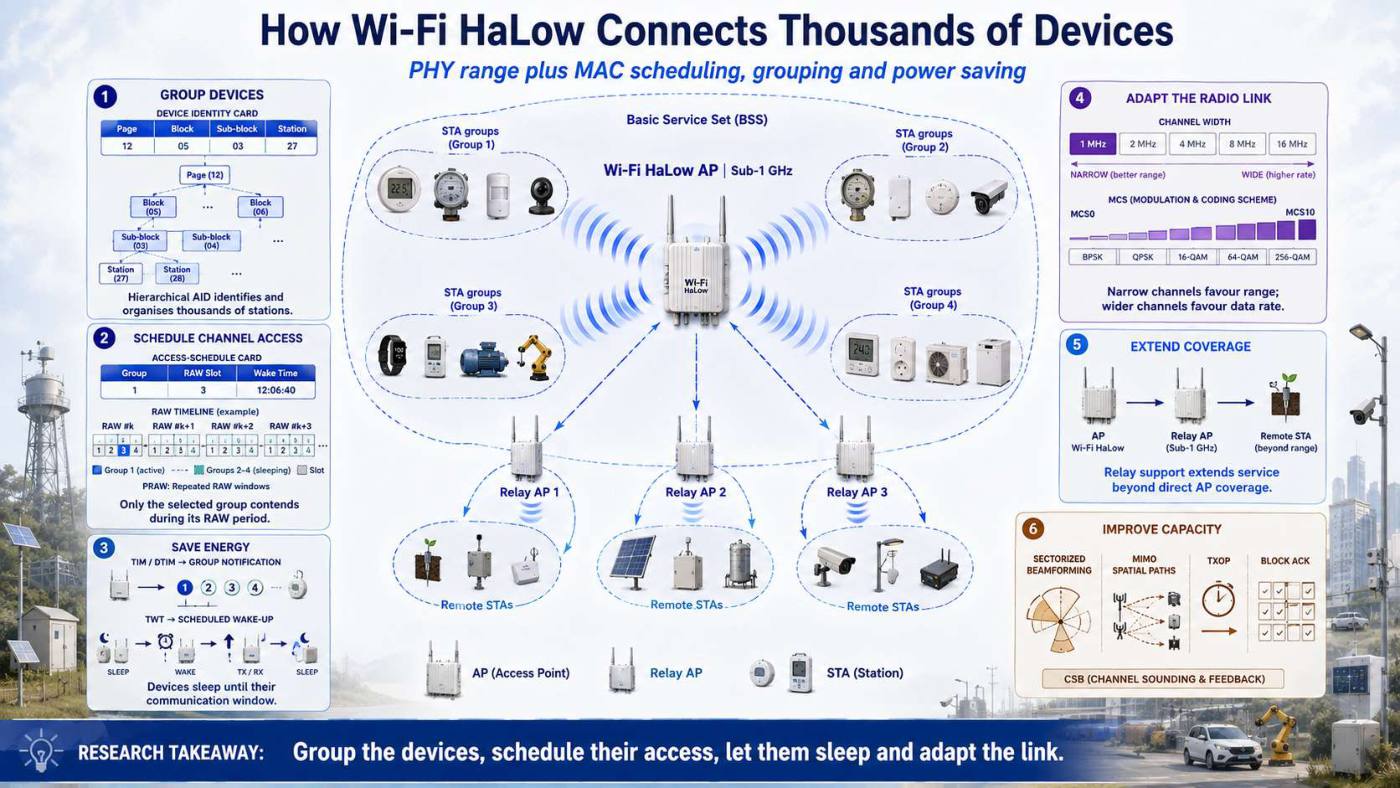
- Concerning the PHY and MAC layer features as provided by IEEE 802.11ah, this paper proposes an IEEE 802.11ah-based scalable NGI architecture.
- An interfacing protocol between the layers is proposed to provide reliability by considering the optimal configuration parameters.
- Compared to the other NGI architectures, this approach considers communication and connectivity solutions with recent features such as programmable, intelligence, and cognitive.
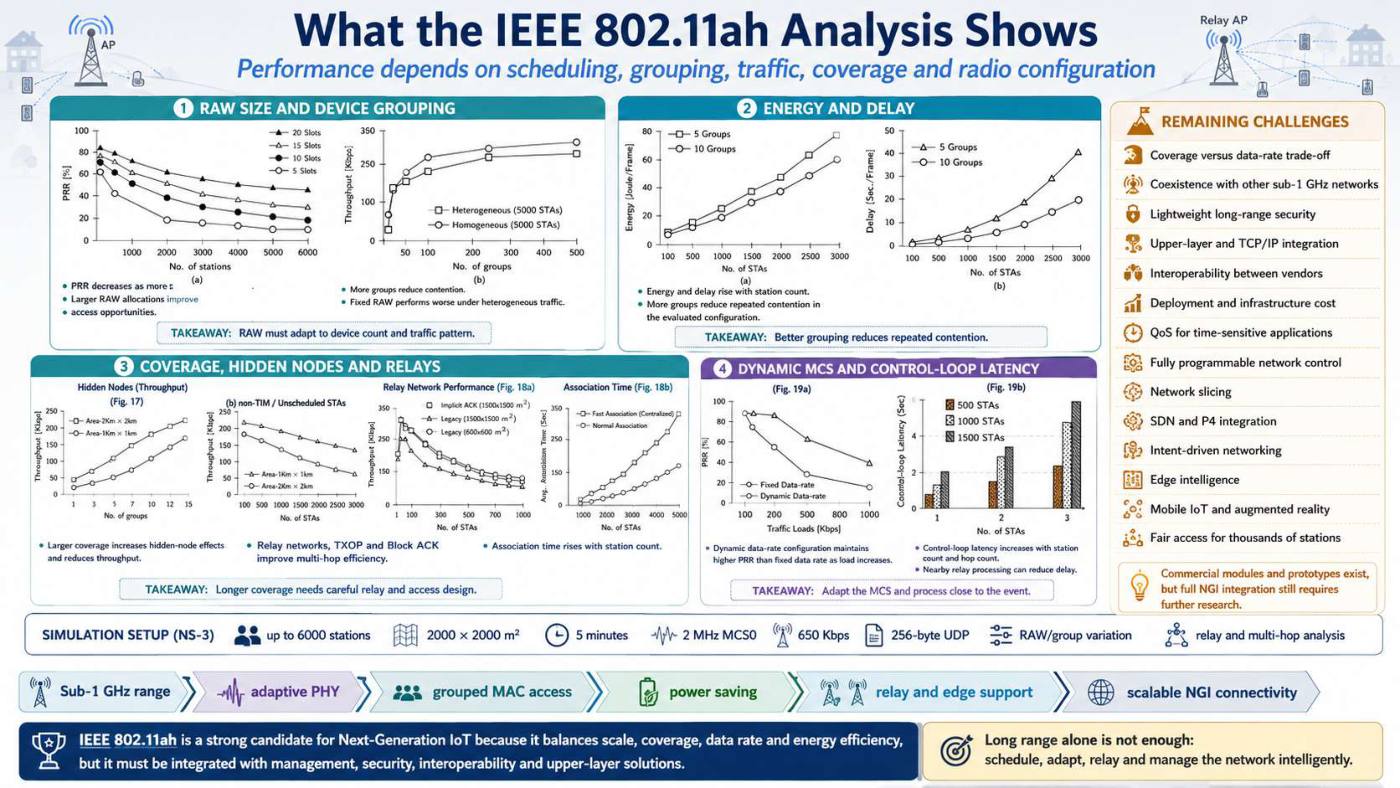
- Open research issues, challenges, and future works of the proposed architecture are provided.
Presentation
A 5-slide visual summary of this paper. Use the arrows, the dots or the left/right arrow keys to move between slides.